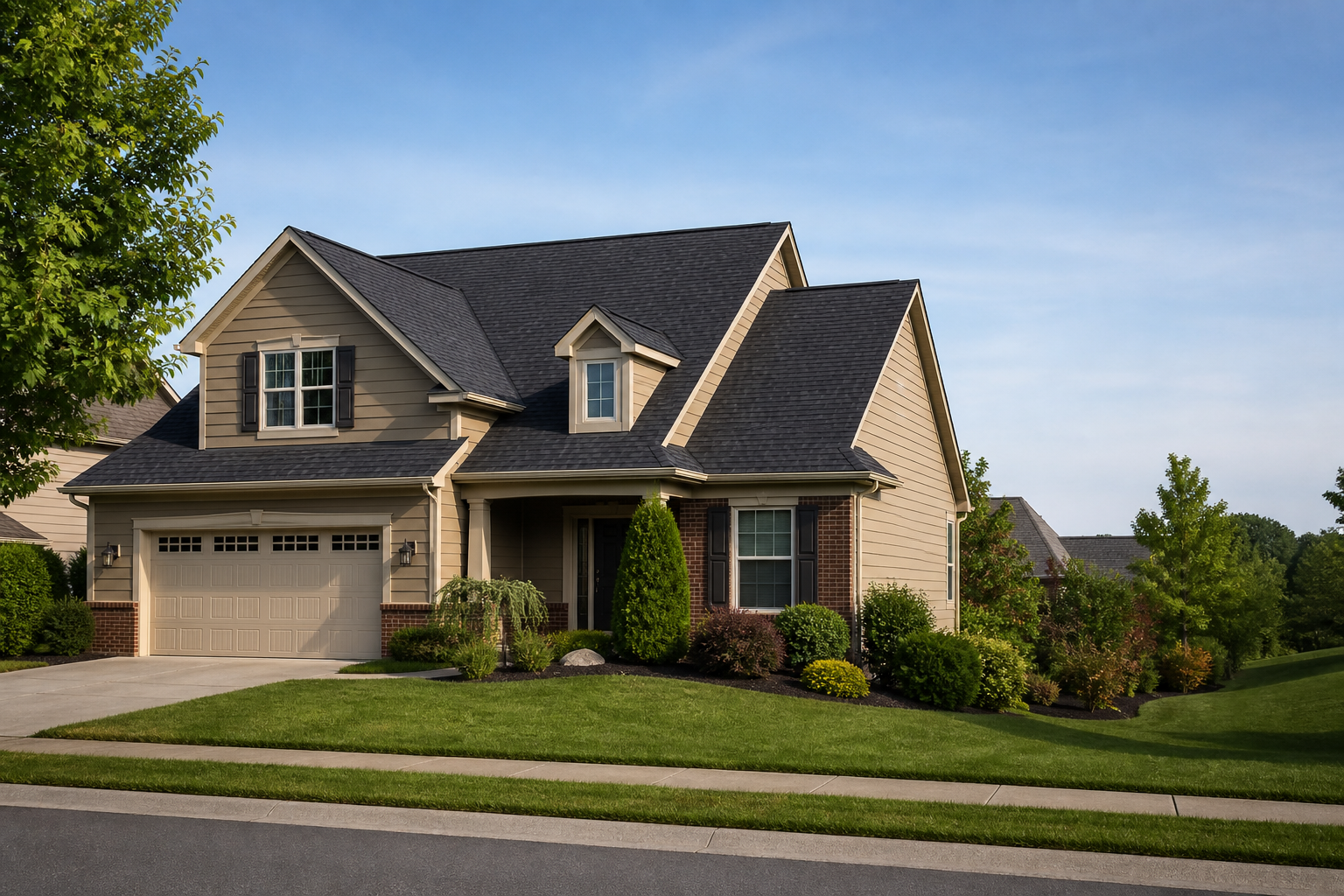
Three towns, three kinds of housing stock
Cranford's older streets near the center of town carry a lot of Dutch colonial and cape style homes, many built with steep pitched roofs meant for snow load rather than looks. Union has more of a mix, older brick and frame homes near the Vauxhall section sitting a few blocks from ranch style construction built decades later. Clark, further out, is mostly split level and ranch homes from a single building boom, which means the roofs across whole blocks were often installed within a few years of each other and tend to reach the end of their life around the same time.
Cranford and the Rahway River
Cranford's low lying streets near the Rahway River bring a problem to roofing work that has little to do with the shingles themselves. Gutters on these homes carry more water during a heavy rain than gutters a mile away on higher ground, and a downspout that empties too close to the foundation adds to flooding that gets blamed on the roof even when the roof is not the real issue. We check gutter pitch and downspout placement carefully on these jobs, because moving water away from the house matters as much as keeping it out of the attic.
Union along the Route 22 corridor
Route 22 splits Union into a commercial strip and the residential streets on either side of it, and those residential streets are where most of our roofing work happens. Older homes near the Kean University area tend to have roofs that were re-covered rather than fully torn off at some point, layered shingles that add weight and hide the true condition of the decking underneath. Newer construction further from the highway is more straightforward, standard framing with fewer surprises once we open it up.
We also see more roof-mounted equipment on these homes than in the other two towns, satellite mounts, old antenna brackets, sometimes a rooftop unit left from a prior owner, and each one is a spot we check for a compromised seal before we ever talk about the shingles around it.
Clark's split levels and their valleys
Clark's split level homes bring their own quirk, multiple roof planes at different heights meeting at valleys and short walls that concentrate water runoff in specific spots. Around Oak Ridge Park and the streets near Central Avenue, we see the same valley and step flashing issues repeat from house to house, because the roofs were framed the same way when the blocks were built. Once we have worked on a few homes on a street, the next one rarely surprises us.
The same weather, three different effects
All three towns get the same storms, but how those storms affect a roof depends on the trees, the pitch, and how exposed the house sits. Homes tucked under mature trees in Cranford collect more debris in valleys and gutters through the fall than the newer, more open lots in Clark, which means the maintenance schedule for otherwise similar roofs ends up different from town to town. We plan storm season work around these differences rather than treating every roof in the area the same way.
A rule of thumb that holds across all three
One thing carries across Cranford, Union and Clark alike, if a roof went on within a few years of the neighbors on the same block, it is worth checking around the same time they check theirs. Roofs built in the same era, by the same builder, using the same materials, tend to reach the end of their life together, and getting ahead of that on one house on a street usually means we are back working nearby before long.
It is a small thing to check, walking a street and noting which roofs share an age and a builder, but it saves a homeowner from being the one house on the block that gets caught out after everyone else already had the work done.